Overview
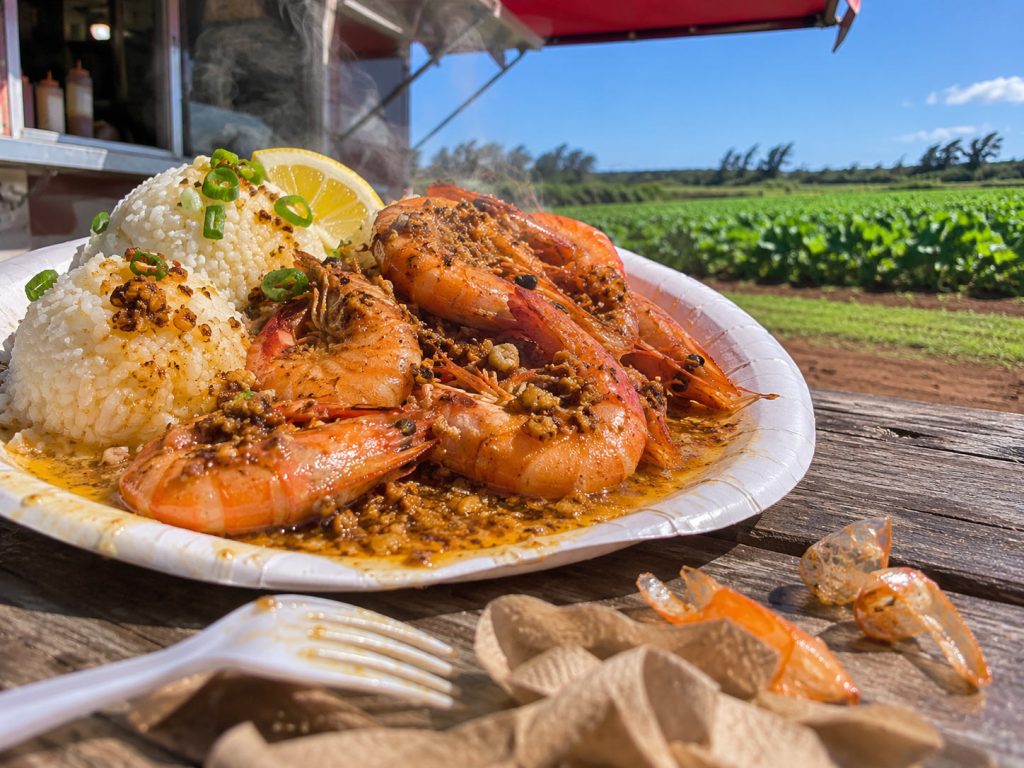
Nobody plans a Hawaii trip around a paper plate. Then you eat garlic shrimp at a roadside stand in Kahuku, standing at a picnic table with butter on your hands and a pile of shells in front of you, and it turns into the thing you describe to people back home. It is a strange thing for a quiet town on the far corner of Oahu to be famous for. Kahuku has no resort strip, no shopping district and no beach anybody fights over. What it has is flat ground, fresh water, and a history of being asked to grow something. Sugar for about eighty years, then shrimp. The plate you eat at lunch is the second answer to the same question.
The Short Answer
Kahuku grows shrimp because the land was already set up for it. The sugar plantation left behind a wide, flat coastal plain with good fresh water and an irrigation habit, and when the industry collapsed the state went looking for a replacement crop. Shrimp ponds fit the ground almost perfectly.
Once there were ponds full of shrimp, somebody was always going to park a truck by the highway and start cooking them in garlic butter. That is the whole story, and it took about a century to happen.
Kahuku Was a Sugar Town First
Long before anybody said the words garlic shrimp, Kahuku was cane country. A developer named Frank Dillingham leased the land from the Campbell family and pushed his railroad out to the North Shore by 1890, which is what made commercial farming out here possible at all. The Kahuku Plantation Company processed its first harvest in 1892, and for the next eight decades the town’s entire reason for existing was sugar. It was not a small operation. The company kept buying neighbors.
- In 1924 it took over the Koolau Agricultural Company’s fields, stretching its land as far south as Kahana Bay
- That same year it became the first plantation in Hawaii to use a mechanical derrick to load cane, which was a genuinely big deal at the time
- In 1931 the Laie Plantation Corporation was dissolved and roughly 2,700 more acres of cane land came with it
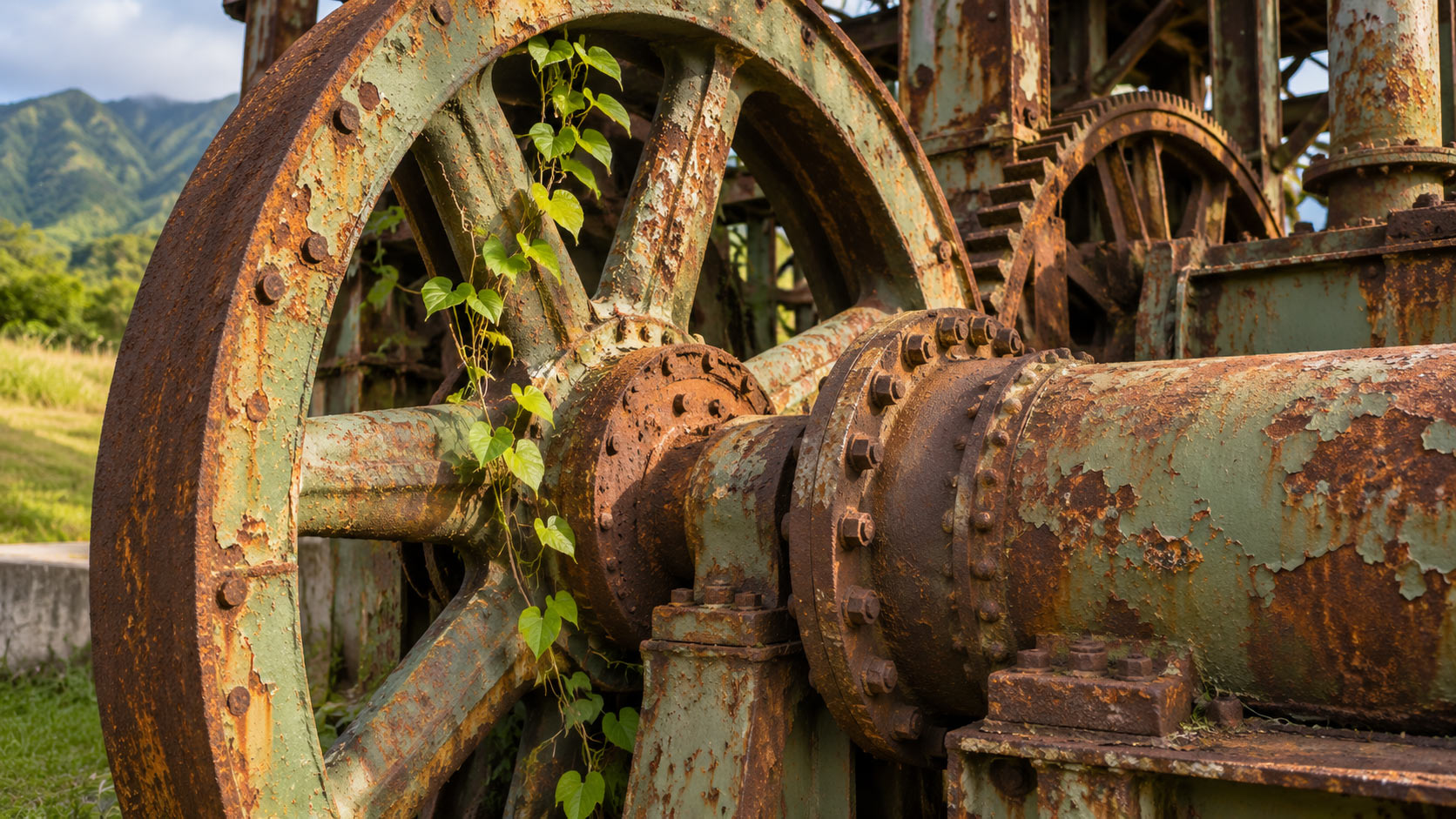
Then it ended. The closure was announced in 1968 and the mill stopped running in 1971. The buildings are still there along the highway, and a lot of the old Kahuku Sugar Mill site now holds shops and food vendors, which is its own kind of joke about what replaced what.
When the Sugar Left, the Water Stayed
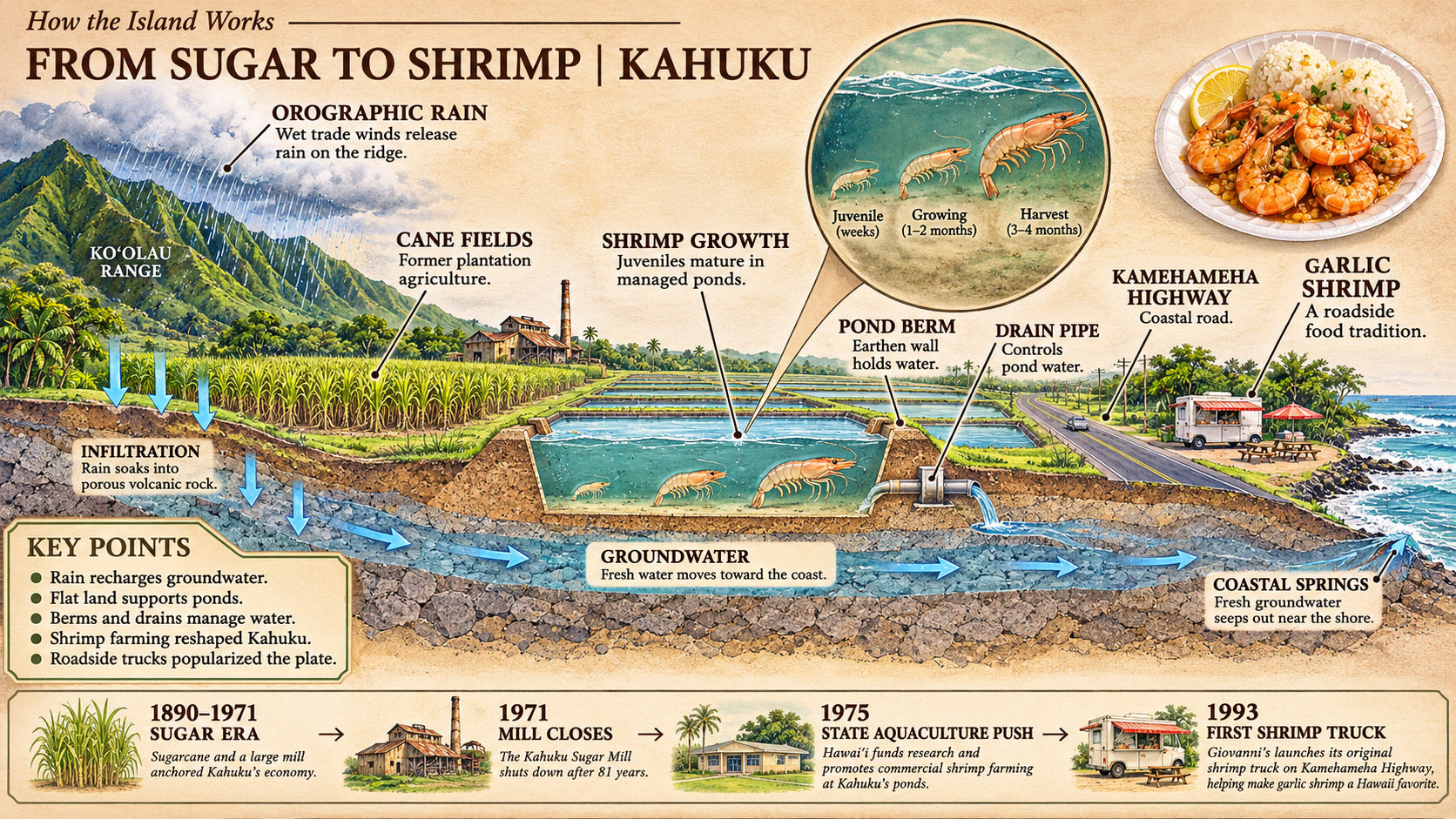
A plantation town that loses its plantation usually just gets smaller. Kahuku had one advantage, and it was not obvious at the time. Everything that made the place good for cane also made it good for something else. The land is flat and wide. Rain falls heavily on the Koolau Range behind it and moves seaward through the ground. A century of agriculture had already carved the plain into fields, ditches and ponds.
In 1975 the State of Hawaii started putting money and research into oyster, fish and shrimp farming, specifically targeting land that had been taro patches, rice paddies and small fishponds. The North Shore turned into one of the most important centers for large scale freshwater aquaculture in the islands. Not because anybody was nostalgic about Kahuku, but because the ground was already most of the way there.
The real foreign investment followed a few years later. In 1979 a Japanese firm called IKKO leased five hectares of Kahuku ponds and set up a seed facility at the Oceanic Institute. That is roughly the moment Kahuku stopped being a former sugar town and became a shrimp town.
The Ponds Are Still Out There
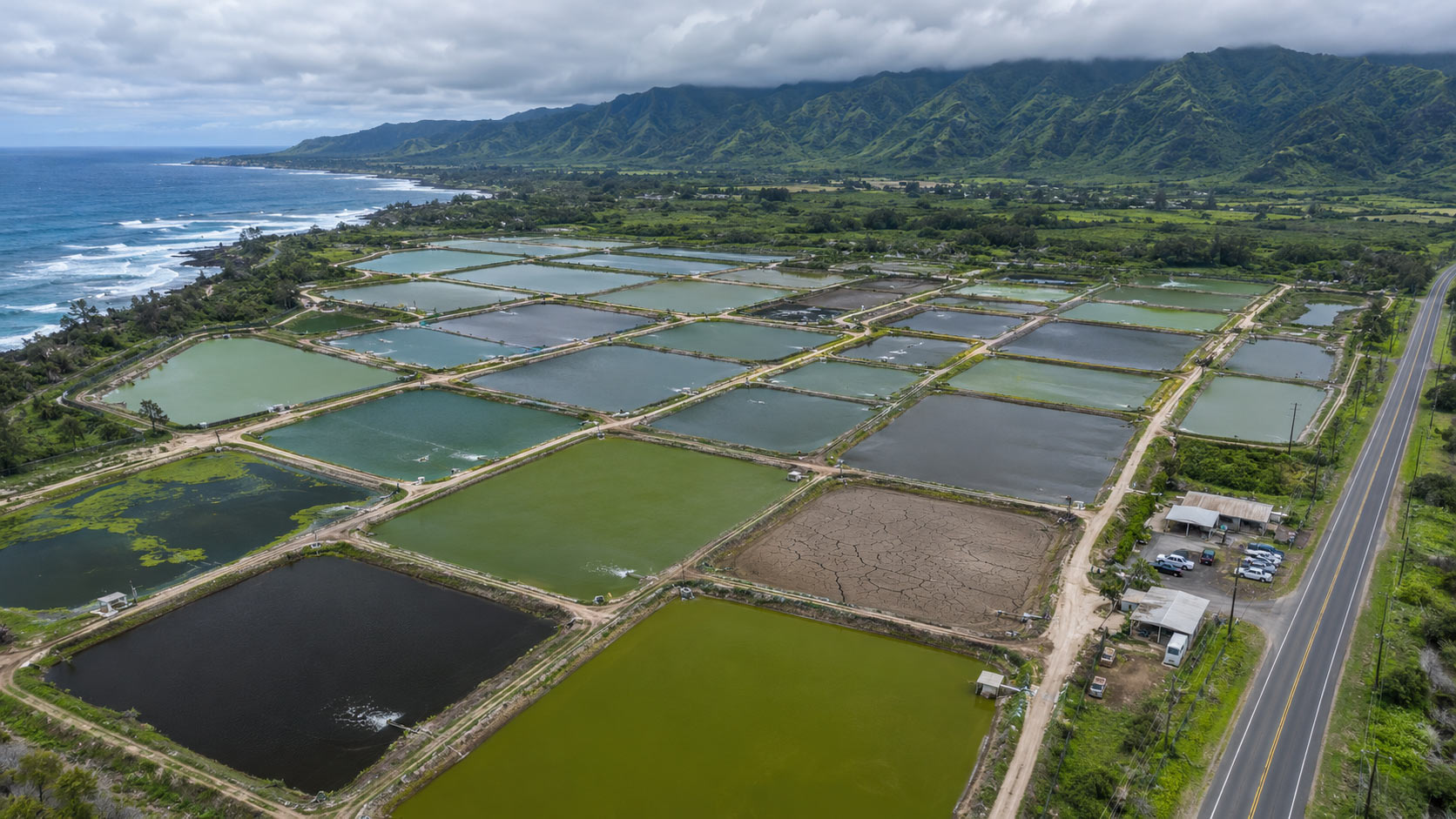
This is the part most visitors drive straight past without noticing. The stands are right on the highway and the ponds are behind them, and from a car seat they just read as fields with water in them.
What grew up around Kahuku is a working aquaculture district. The Kahuku Aquaculture Park has been described as about six farms, raising shrimp in big earthen ponds and tilapia in concrete raceways, which is a very different style of farming from either one on its own. Earthen ponds are slow and open to the weather. Raceways are controlled and intensive. Kahuku runs both in the same few square miles.
Hawaii’s role in all of this is bigger than the plate suggests. University of Hawaii Sea Grant calls Hawaii the birthplace of specific pathogen free shrimp broodstock, the disease free breeding stock that gets shipped out to farms elsewhere. That work has mattered to the global shrimp industry well beyond anything that happens at lunchtime. The industry here has shifted over the years, with a lot of the remaining shrimp operations on Oahu now focused on broodstock rather than growing shrimp for dinner, but the ponds and the knowledge both stayed put.
Then Somebody Put It on a Plate
The food came last, and more recently than people assume. In 1993 someone converted a 1953 bread truck, drove it out along the North Shore and started selling garlic shrimp from the window. Within a couple of years that truck had a permanent spot in Kahuku and a line in front of it.
After that it moved fast. Other stands opened, and today the shrimp strip runs along Kamehameha Highway from Haleiwa all the way around to Punaluu, with more at Kualoa. Some are trucks, some are shacks, some are permanent buildings pretending to be trucks. Most sell a garlic butter plate and a hot and spicy plate, and then each one has a thing it does that the others do not.
The order never really changed, though. A pile of shrimp, a scoop or two of rice, a paper plate, a plastic fork and a stack of napkins you will need all of.
What Actually Makes It a Kahuku Plate
There is no official recipe, and anybody who tells you there is a single correct Kahuku style is overselling it. What is consistent is the approach.
- Garlic in quantity, chopped coarse rather than minced, and cooked until some of it browns and turns nutty instead of staying raw and sharp
- Butter as the sauce, not a glaze. The best version of this plate leaves a pool at the bottom that the rice is supposed to go into
- Rice, always, because this is a plate lunch and that is what a plate lunch is
- Served fast and eaten standing up or at a picnic table, which is part of the flavor whether anybody admits it or not
The one real argument is shells. Some stands serve shrimp head on and shell on, straight out of their own ponds, and the shells are where a lot of the flavor comes from once they hit hot garlic butter. Others serve it peeled so you can just eat. Neither is wrong and neither is the official way. If you get shells, you peel them with your fingers, and the mess is the point.
A fair warning that nobody gives you in advance: you will smell like garlic for several hours. Plan the rest of your afternoon accordingly.
Where Lunch Sits on a Circle Island Day
On the Oahu circle island food tour, Kahuku is the middle of the day and it is built to land exactly when you are hungry. The morning runs down the southeast side with malasadas for breakfast, the Halona Blowhole, Makapuu Lookout and a stop at the macadamia nut farm, then up the windward coast past the Koolau cliffs to Kualoa Regional Park with its view of Mokolii.
By the time the route reaches Kahuku you have been out since early and you have earned a real meal. The garlic shrimp lunch plate at Tanaka Shrimp is that meal. Tanaka took over the Kahuku garlic shrimp tradition when it was rebranded in January 2024, carrying on from Fumi’s Kahuku Shrimp, and it still runs the same lineup: garlic, spicy, and lemon pepper. There is a vegetarian option if you ask for it.
Then the day keeps going, which is the other reason the timing works.
- The Kahuku Land Farm fruit stand, for tropical fruit and banana lumpia, just up the road
- The North Shore beaches, Banzai Pipeline, Sunset Beach and Waimea Bay, mostly as a drive-by
- Puaena Point, where Hawaiian green sea turtles sometimes rest on shore. Sometimes, not always
- Historic Haleiwa Town, free time, galleries and shave ice
Eating a heavy garlic butter plate and then getting back on a bus sounds like a mistake and somehow is not. The afternoon is scenery and walking around, not activity, and the North Shore is a good place to be full.
A Town That Got Asked Twice
Here is what is actually interesting about Kahuku, and it is not the shrimp. Most plantation towns in Hawaii lost their industry and never got a second one. The mill closed, the jobs left, and what is left is a name on a highway sign and some rusted iron in the grass.
Kahuku got asked a second question. The same flat ground and the same fresh water that grew sugar for eighty years turned out to grow shrimp, and then the shrimp turned into a reason for thousands of people a year to drive to the far corner of the island on purpose. Nobody designed that. A state research program, a few leases, some earthen ponds and one old bread truck added up to a food that now stands for the whole North Shore.
So when you are standing at that picnic table peeling shells with butter running down your wrist, you are eating the second act of a town that was not supposed to get one. If you want to see the rest of the island the same day, the full day circle island tour puts Kahuku right in the middle of it. Bring napkins.